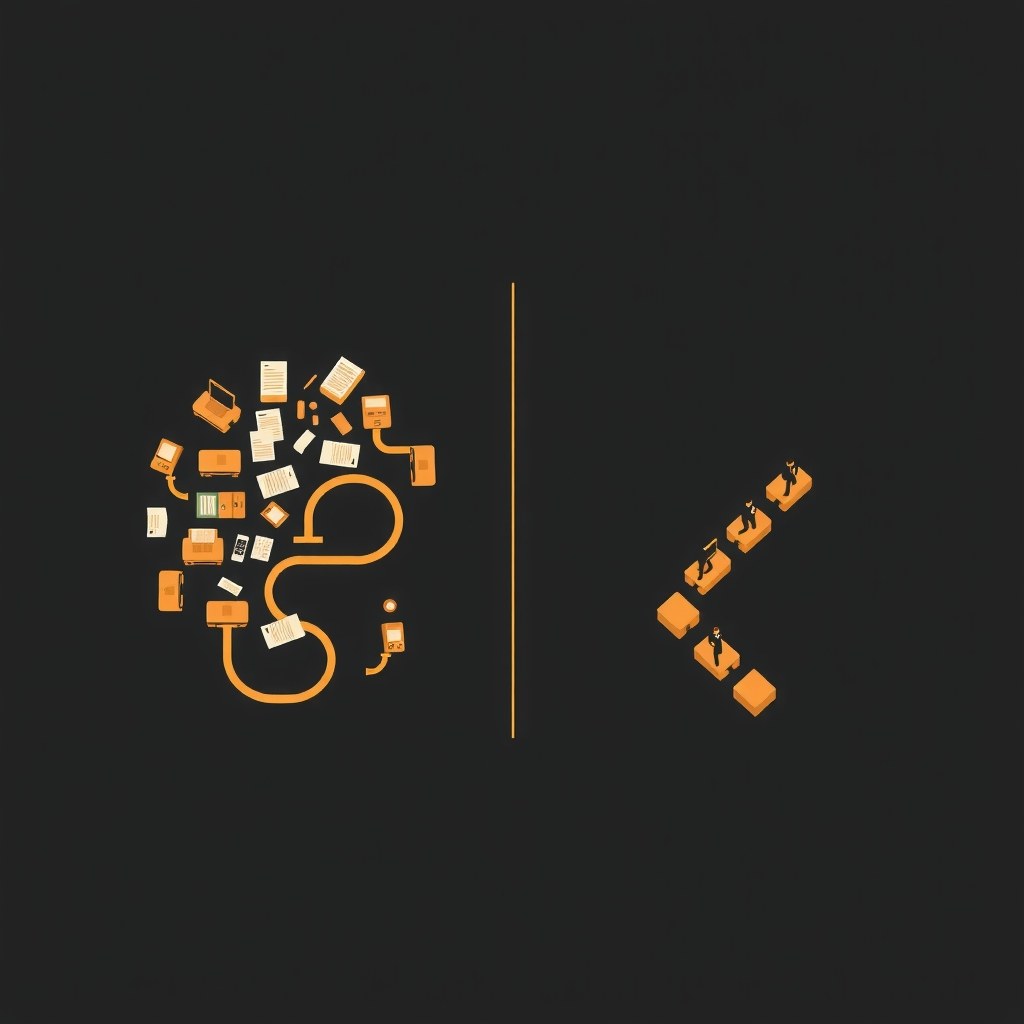

No one can say with confidence whether or when AI systems will exceed human ability across most kinds of work. Researchers and industry leaders disagree, sometimes sharply. For most organizations, superintelligence is not a planning assumption, and it should not be.
It is, however, a useful test. Engineers test a structure by pushing one load to an extreme and watching what gives way. Governance can be tested the same way. Imagine AI capability rising far beyond what your organization uses today, and ask which parts of your governance would still work. For most organizations the answer is uncomfortable, and the weak points it reveals are already weak now.
The Assumptions Governance Quietly Depends On
Most governance frameworks rest on assumptions that are rarely written down.
That decisions are made at a pace people can review. That the person who approves a decision understands what they are approving. That responsibility for an outcome can be traced to a named role. That the organization can stop or reverse a process when something goes wrong. And that the knowledge needed to run critical operations sits inside the organization.
The AI organizations use today already puts pressure on each of these. In the hypothetical, a far more capable AI would strain some of them to the point of failure.
What Breaks First
Review breaks first. Most oversight runs on a calendar: monthly management reviews, quarterly risk committees, annual audits. A periodic look works when problems develop slowly enough to be caught at the next review. A system that acts continuously can drift, fail or repeat an error many times in the gap between reviews. Without monitoring and escalation thresholds that bring significant problems forward between meetings, oversight learns about them after the fact.
Understanding breaks next. When the reasoning behind a recommendation is beyond what the approver can evaluate, approval becomes a formality. The signature remains, but the judgment it was meant to represent is gone.
Accountability follows. “The system recommended it” is already a common answer when an automated decision is challenged. If no named person owns the outcome of a system’s decisions, responsibility goes unresolved while the consequences still land on someone, often the people the organization exists to serve.
Then control. Many organizations have never tested whether they could pause an AI system that has become part of daily operations, how long it would take, and what would run in its place.
And finally capability. When the knowledge of how work is done lives mainly in a vendor’s model, the organization’s ability to check that work weakens. Without its own expertise and its own test cases, it risks handing over not only the task but the ability to judge the task.
Five Controls Worth Building Now
No control can be shown to work against a system that does not exist. But each of the failures above has a counterpart that is useful today, and none of them requires predicting the future. The wider changes AI is bringing to governance are covered in our earlier piece, Governing the Future.
- Decision rights written for AI. For each system, set out which decisions it may make on its own, which it may only recommend, and which it may not touch. Review the list whenever the system’s role changes.
- A named owner for every AI system. One role accountable for what the system does, with the authority to change or stop it. Not a committee, and not the vendor.
- A tested way to stop. Decide who can pause a system, how quickly, and how the work continues without it. Then test it, the way organizations test their business continuity plans.
- Records that explain decisions. Keep enough information to reconstruct why a significant decision was made: what the system recommended, on what inputs, and who accepted it.
- The ability to check the work. Keep enough expertise inside the organization to test a system’s outputs against its own cases and to run critical work without it, and know what leaving a vendor would involve.
Why This Is a Present Concern
It would be easy to treat this as a question for another day. That would be a mistake for a practical reason. Every control above addresses risks organizations already face with the AI they use today: scoring tools no one can explain, automated decisions no one owns, vendor dependence no one has assessed.
These controls are also far cheaper to build now. Decision rights, ownership and stop procedures are straightforward to set while AI systems are few and their roles are narrow. They are much harder to set once systems are embedded in every process and the people who understood the old way of working have moved on.
Questions for Your Next Board Meeting
Boards and leadership teams can start with five questions.
- Which decisions in our organization are now made or shaped by AI, and who owns each one?
- Could we pause our most important AI system tomorrow, and what would happen if we did?
- When an AI-supported decision is challenged, can we explain how it was reached?
- Which of our critical capabilities now depend on a single vendor?
- Who in the organization has the role and the authority to challenge AI outputs?
If these questions are hard to answer, the organization is not ready for superintelligent AI. More importantly, it is not fully in control of the AI it already has. The hypothetical is useful because it makes that visible now, whatever AI turns out to become.