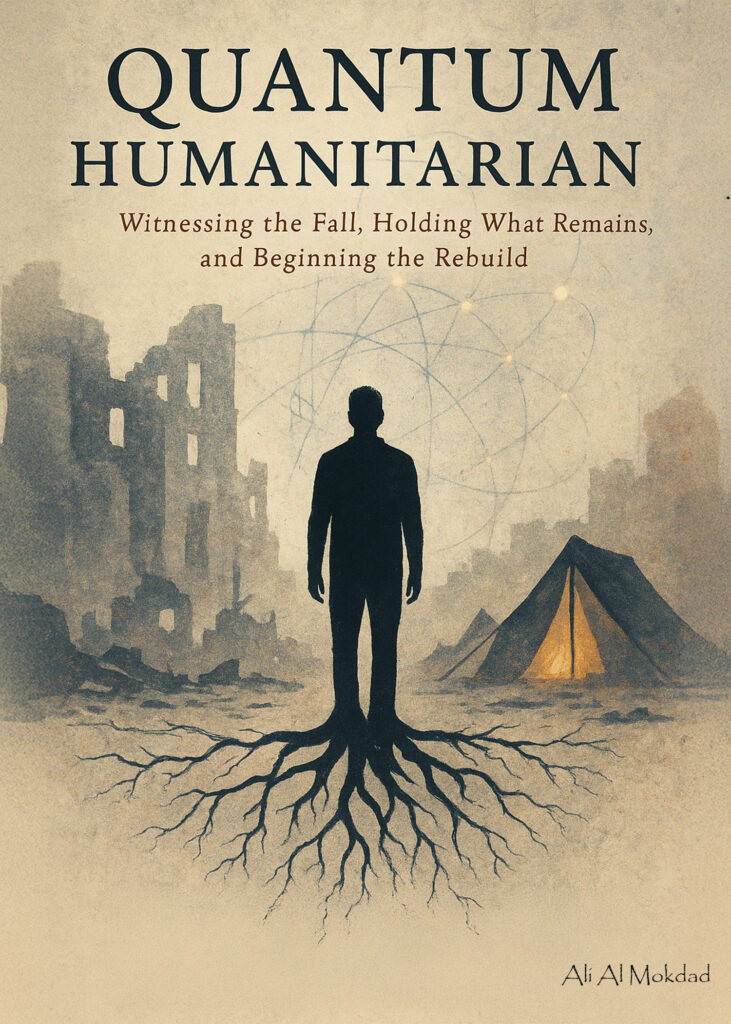
At Operations Copilot, we are driven by the belief that better systems begin with better questions—and bolder leadership. That’s why we’re proud to spotlight Quantum Humanitarian, the newly released book by Ali Al Mokdad, a key contributor to our organization and a strategic leader behind several of our initiatives.
Recently ranked an Amazon #1 Best Seller in Philanthropy & Charity and a #1 Hot New Release in Disaster Relief, Refugee Studies, and Current Events, Quantum Humanitarian is more than a book. It is a call to rethink how we lead, how we care, and how we build systems that center presence, proximity, and purpose.
Ali Al Mokdad has played a central role in shaping Operations Copilot’s approach to systems optimization, ethical leadership, and grounded humanitarian practice. His writing echoes the same values we embed in our work—challenging assumptions, honoring the unseen, and designing operations that serve both mission and humanity.
We see Quantum Humanitarian as a powerful extension of this vision—an invitation for leaders, practitioners, and changemakers to build differently.
#QuantumHumanitarian #AliAlMokdad #OperationsCopilot #BestSeller #StrategicLeadership #SystemsThinking #HumanitarianAid #FirstPrinciplesThinking #QuantumNarrative #NonprofitLeadership #Localization #FirstBookInQuantumNarrative